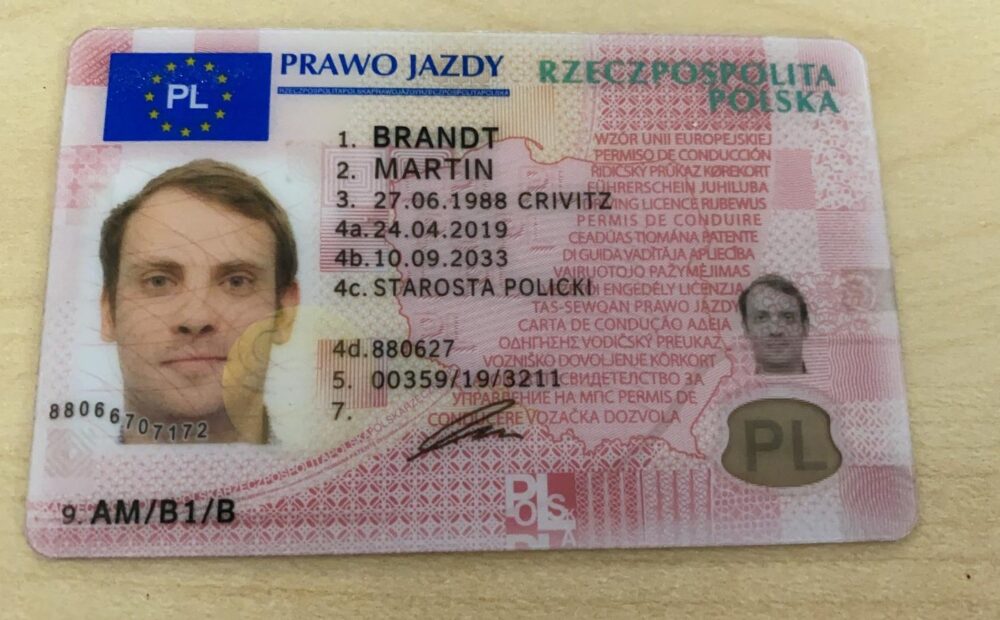
Are You In Search Of Inspiration? Try Looking Up Polish Driving License
Understanding the Polish Driving License: A Comprehensive Guide
Driving is a necessary part of contemporary life, offering individuals the flexibility to travel at their benefit. In Poland, getting a driving license is a crucial milestone for many. This post intends to provide detailed insights into the Polish driving license, covering the process of getting one, the kinds of licenses readily available, and common FAQs.
Kinds Of Polish Driving Licenses
Poland problems numerous categories of driving licenses based on vehicle types. The main licenses include:
License Category
Automobile Type
Minimum Age
Required Tests
AM
Mopeds and small scooters
14 years
Theoretical and useful
A1
Motorcycles as much as 125cc
16 years
Theoretical and useful
A2
Motorbikes with an optimal power of 35kW
18 years
Theoretical and practical
A
Unlimited bikes
24 years
Theoretical and useful
B
Automobile (up to 3.5 heaps)
18 years
Theoretical and practical
C
Trucks (over 3.5 loads)
21 years
Theoretical and useful
D
Buses
24 years
Theoretical and practical
BE
Trailers (over 750 kg)
18 years
Theoretical and useful
Categories Explained
- AM: This license is primarily for those seeking to operate scooters or mopeds. It has the most affordable age requirement.
- A1: Ideal for those who want to ride light bikes.
- A2 and A: For more powerful motorcycles, with An enabling unrestricted access to all bike types.
- B: The most common license for driving guest cars.
- C and D: These licenses cater to business vehicle chauffeurs, frequently needing extra training and screening.
- BE: Allows motorists to tow trailers over specific limits.
The Process of Obtaining a Polish Driving License
Step 1: Enroll in a Driving School
The very first step towards obtaining a Polish driving license is registering in a licensed driving school. It is important to choose a school that is recognized by local authorities to guarantee the validity of your training.
Step 2: Theoretical Training and Exam
When enrolled, students need to complete a theoretical training course that covers traffic regulations, vehicle operation, and roadway security. Following Europejskie Prawo Jazdy Bez Egzaminu , trainees take a theoretical assessment consisting of multiple-choice questions.
Action 3: Practical Training
After passing the theoretical exam, trainees begin practical driving lessons. This hands-on training is essential to develop driving abilities and self-confidence. The number of required lessons can vary based upon specific capability but normally spans numerous weeks.
Step 4: Practical Driving Test
Upon conclusion of the practical training, the student needs to pass a practical driving test carried out by a certified inspector. This test assesses the ability to operate an automobile securely and follow traffic guidelines.
Step 5: Application for the Driving License
After effectively passing both tests, students must gather essential documentation, consisting of evidence of identity, residency, and evaluation outcomes, to request their driving license through the regional administrative workplace.
Required Documents
- Recognition (e.g., nationwide ID, passport)
- Proof of home
- Medical certificate
- Files from the driving school
- Evaluation results
Benefits of Having a Polish Driving License
Obtaining a Polish driving license provides various benefits, including:
- Independence: The most substantial advantage is the self-reliance to drive without depending on public transportation.
- Work Opportunities: Many jobs require employees to have a driving license, especially in logistics, sales, and shipment services.
- Travel: Having a driving license makes traveling within Poland much easier and more versatile.
- Recognition within the EU: A Polish driving license is recognized throughout European Union member states.
Common FAQs About the Polish Driving License
1. How long does it require to obtain a Polish driving license?
The period varies based upon specific readiness, but the entire process can take anywhere from a couple of months to a year, depending on how regularly one attends lessons and the speed of useful and theoretical test scheduling.
2. Can foreigners get a Polish driving license?
Yes, immigrants living in Poland can obtain a Polish driving license. They need to offer a legitimate residency permit and pass the theoretical and practical assessments.
3. Exists a difference in between a Polish driving license and an international driving permit?
Yes, a Polish driving license is specific to Poland and might not stand in other nations. For driving abroad, it is recommended to get an International Driving Permit (IDP).
4. What takes place if I stop working the driving tests?
A candidate can retake the tests after a minimum waiting period. The number of retries may differ based on specific guidelines, but trainees are generally motivated to carry out additional practice before attempting once again.
5. Does a Polish driving license have an expiration date?
Yes, a Polish driving license typically expires after 15 years from the date of issuance. Chauffeurs must make an application for renewal within this timeframe, providing upgraded documents.
Getting a Polish driving license is a significant achievement that opens up many opportunities for travel and employment. Comprehending the kinds of licenses offered, the application procedure, and the associated advantages can assist individuals in browsing this necessary journey. While the process might appear complicated, the ultimate benefit— flexibility and autonomy— is well worth the effort. With the right preparation and resources, anybody can successfully get their Polish driving license and delight in the open roadways of Poland and beyond.